
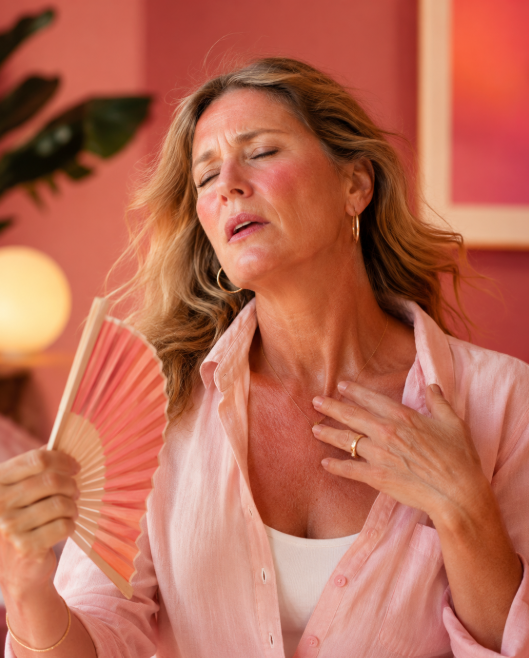
Hot Flashes: Why They Happen
That sudden wave of heat rising through your chest, neck, and face — followed by sweating, sometimes a racing heart, sometimes chills — isn't "in your head," and you're far from alone. Hot flashes and night sweats (doctors call them vasomotor symptoms) affect up to 8 in 10 women during the menopause transition, making them one of the most common experiences of this stage of life.
Here's what's actually happening. Deep in your brain, the hypothalamus works as your body's thermostat. Estrogen helps keep that thermostat steady — so as estrogen levels swing and decline during perimenopause, the thermostat becomes oversensitive. The comfortable temperature range your body tolerates narrows dramatically. Small shifts that you once never noticed now register as "overheating," and your brain responds with emergency cooling: blood vessels in your skin dilate (the flush), sweat glands activate, and your heart rate climbs. The whole event usually passes in one to five minutes — but it can repeat many times a day, and at night it can fragment your sleep.
How long does this last? Longer than most women are told. Research following thousands of women through the transition found vasomotor symptoms persist for a median of about seven years — and they often begin well before your final period.
Hot flashes also have triggers, and they're personal. Common ones include alcohol, caffeine, spicy food, warm rooms, and stress — but your pattern is yours. That's where tracking changes the game: logging each hot flash alongside your day builds the picture no single doctor's visit can see. Over time, KnowMeno can show you when they cluster, what tends to precede them, and whether they're trending better or worse — real data you can bring to your next appointment.
If hot flashes are disrupting your sleep, work, or daily life, that's worth a conversation with your clinician. Effective, evidence-based treatments exist, from hormone therapy to newer non-hormonal options, and you don't have to simply endure.